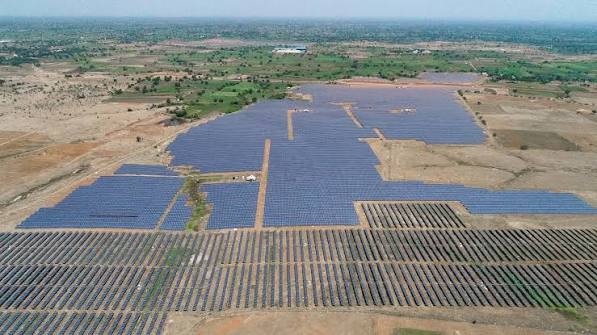
India’s energy transition has moved from aspiration to hard numbers. Solar installations are breaking records, the country has climbed the global renewable rankings and rooftop panels are spreading across towns. The central challenge has also shifted, from building generation to making sure the grid can carry and store what is built.
A record-setting year
India installed a record 27GW of solar capacity in the first half of 2026, up 49% from 18GW in the same period last year. The strongest quarter was the first, with 15GW installed, followed by 12GW in the second quarter, the second-highest quarterly addition on record. By the end of June, solar made up 30% of India’s total installed power capacity and 57% of installed renewable capacity. India adds record 27GW solar PV in H1 2026 as installations surge 49% YoY +2
The momentum follows a remarkable fiscal year. In FY2026, India added a record 55.3 GW of non-fossil capacity, driven by 44.6 GW of solar, an 87.2% year-on-year increase. Cumulative solar capacity reached 150.26 GW by the end of March 2026. By September, India’s renewable capacity had reached about 299.2 GW, after adding nearly 35.2 GW of solar in the first nine months of the year. India Adds Record 45 GW Solar PV Capacity In FY 2026 +3
One headline stands out: non-fossil sources reached 50% of total power capacity, five years early, and India now ranks third globally in renewable capacity, overtaking Brazil. pulsepulse
The rooftop revolution
Much of the recent excitement comes from small-scale solar. In the first half of the year, India added about 6.4 GW of rooftop solar, a 104% increase over the same period in 2025. Distributed solar had already surged in the last fiscal year, with 16.31 GW added, led by the PM Surya Ghar scheme. Rooftop systems account for about 17% of new solar capacity, and large-scale projects for the remaining 83%. jmkresearchtaiyangnews
This matters beyond emissions. Rooftop solar lets households and small businesses cut electricity bills, reduces strain on distribution networks and spreads ownership of the energy transition. Tariffs show how competitive it has become: rooftop bids ranged from Rs 2.97 to Rs 4.11 per kWh, with the lowest recorded in an April 2026 SECI auction. renewablewatch
Where the sun shines hardest
Capacity is concentrated in a few states. Reports consistently show Gujarat and Rajasthan leading installations, with Gujarat the largest contributor to solar additions. These states combine strong sunshine, available land and developed transmission corridors. The pattern creates a geographic mismatch: power is generated in the west while demand is spread across the whole country, which raises the importance of long-distance transmission. downtoearth
The manufacturing story
Domestic manufacturing has expanded alongside installation. India’s module capacity has risen to 172 GW since 2014. That is a major strategic achievement, since it reduces dependence on imports. But it brings a new problem. Industry participants at a May conference observed that India now has surplus module manufacturing capacity relative to the pace of project awards, power purchase agreement signing and actual installation. Factories built on the expectation of endless growth can struggle if auctions slow. pulserenewablewatch
There are signs of this slowing. Despite the record installation volume, new utility-scale procurement activity weakened in the first half of 2026. Part of the recent surge came from projects commissioning ahead of key policy changes, which means some demand was pulled forward. Future growth depends on fresh auctions and signed contracts. pv-techpv-magazine-india
The grid is the new frontier
The biggest constraint is infrastructure. Industry analysts note that renewable additions have consistently outpaced transmission and storage, creating grid bottlenecks in several states. When power cannot be evacuated, plants sit idle, developers lose revenue and lenders become cautious. indianinfrastructure
Storage and firm power are the answer, and the market is already pricing them. Solar-plus-storage tariffs ran between Rs 3.12 and Rs 5.51 per kWh, while firm and dispatchable renewable projects were around Rs 6.27 to Rs 6.28 per kWh. That premium over plain solar shows what reliability costs, and it explains why batteries, pumped hydro and better transmission now attract as much attention as panels. renewablewatch
New opportunities
Beyond conventional plants, agrivoltaics, which lets farming and power generation share the same land, is described as one of India’s largest untapped renewable opportunities. For a country with small farms and land scarcity, it could let farmers earn from sunlight without giving up crops. renewablewatch
Looking ahead
India is working toward 500GW of non-fossil capacity by 2030, which requires sustained deployment alongside expanded transmission and storage. The country has proven it can add panels at record speed. The next phase is less glamorous but more decisive: modernising distribution companies, building transmission lines, signing storage contracts and keeping auctions flowing so factories stay busy. Whether the boom becomes a durable transformation depends on how quickly those pieces fall into place. pv-tech